TNUoS Standing Charges Are Changing, And It Could Affect Your Bottom Line

TNUoS Standing Charges Are Changing, And It Could Affect Your Bottom Line
📰 What’s Happening
From April 2026, the way UK businesses pay for part of their electricity network costs is set to change. For many organisations, that will mean higher standing charges, even if overall energy use remains the same.
The increase relates to changes in TNUoS (Transmission Network Use of System) residual charges, a technical element of your electricity bill that forms a significant portion of fixed network costs.
These charges fund the operation, maintenance and expansion of the UK’s high-voltage transmission network the infrastructure that transports electricity from generators to regional distribution systems.
Under Ofgem’s next regulatory price control for electricity transmission, RIIO-ET3, network operators are expected to undertake substantial investment in upgrading and expanding grid infrastructure. That programme, projected to run into tens of billions of pounds, will be recovered from energy users over time.
A greater proportion of those costs is now expected to be collected through standing charges rather than consumption-based rates.
In practical terms, this means a larger share of your electricity bill will be fixed and less directly linked to how much power you use.
Why It’s Changing
The UK electricity system is undergoing structural transformation.
As renewable generation expands, electric vehicles scale, and electrification of heat and transport accelerates, the transmission network requires significant reinforcement. Much of the existing infrastructure was not designed for a decentralised, low-carbon system with higher peak demand and more complex power flows.
RIIO-ET3 is intended to unlock long-term investment in:
-
new substations
-
upgraded transmission lines
-
improved system flexibility
-
digital infrastructure and grid modernisation
Shifting more recovery into standing charges provides network operators with more predictable revenues to support this investment.
From a system planning perspective, that approach offers stability. For businesses, however, it increases fixed cost exposure regardless of consumption levels.
💷 What It Means for Businesses
This is unlikely to appear as a sudden price shock. Instead, it will gradually increase baseline electricity costs.
There are several important implications:
1. Reduced impact of efficiency alone
As a higher proportion of costs become fixed, consumption reduction will not lower total bills as dramatically as before.
2. Greater importance of cost forecasting
Standing charges are predictable once set, but they are difficult to mitigate. Budget planning and long-term cost modelling become more critical.
3. Contract structure matters
The way network costs are passed through within supply agreements will significantly influence overall exposure. Understanding pass-through mechanisms is increasingly important.
While higher fixed charges may be unwelcome, the underlying investment supports long-term grid resilience, decarbonisation and system security.
In the short to medium term, however, businesses need clarity to avoid misaligned forecasts and unexpected cost pressure.
For organisations that have already contracted beyond April 2026, some of these cost changes may already be reflected in agreed rates. However, the greater risk often lies in not reviewing contracted capacity and future load requirements in advance — as misalignment can increase exposure to fixed cost rises over time.
 The Open Take
 The Open Take
The energy transition is not only about cleaner generation it is about reconfiguring the infrastructure that supports it.As fixed network charges increase, understanding cost structure becomes as important as managing consumption.
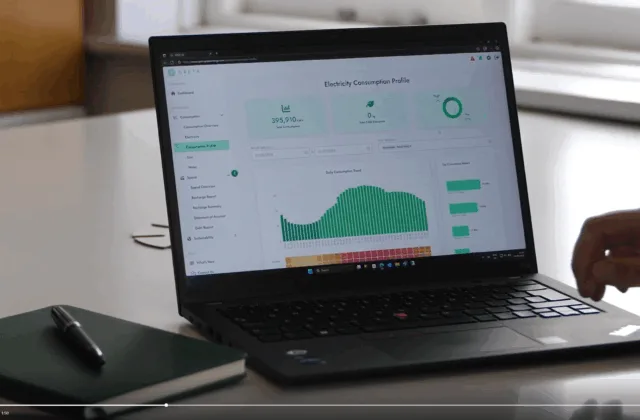
Clearer data, informed procurement decisions and visibility across energy and carbon performance are becoming essential tools not optional extras.
This is not a reason for alarm. It is, however, a reason for strategic preparation.
Businesses that understand these structural changes early will be better positioned to manage cost exposure, protect margins, and navigate the next phase of the UK’s energy system transformation.
Get in contact with us if your worried about how this will affect your business or to find out more

External Articles
10 years to transform the future of humanity or destabilize the planet | Johan Rockström
Wave Power Could Be Energy's Next Big Leap

